Preface
Welcome to a practical look at jobs that AI can't replace, or more accurately, jobs that are much harder for AI to replace completely. As AI tools become more capable, it is normal to feel uncertain about the future of work. But AI is not only a replacement force. In many fields, it is becoming an assistant that removes repetitive work and makes skilled people more productive.
At APOB AI, we see this from the creative side every day. AI image tools can help people create polished visuals, professional portraits, and virtual characters faster than before. But the final value still comes from human taste, strategy, empathy, judgment, and responsibility. Those are the qualities this article focuses on.
If you are updating your career materials while thinking about your next move, you can use Generate LinkedIn Photo for free to create a cleaner professional profile image.
Create an AI Influencer to make money
Introduction
Understanding jobs that AI can't replace is useful for anyone trying to future-proof a career. The goal is not to pretend that certain industries will never change. They will. The better goal is to understand which roles still depend heavily on human connection, emotional intelligence, creativity, complex problem-solving, leadership, physical skill, and accountability.
The World Economic Forum's Future of Jobs Report 2025 estimates that labor-market transformation could create 170 million jobs and displace 92 million by 2030. That means the AI era is not just about job loss. It is also about job redesign. People who learn to combine human skills with AI tools will have a better chance of staying valuable.
In this guide, we will keep the original focus on high-salary jobs that AI can't replace while adding a more realistic lens: AI may automate tasks inside these jobs, but it struggles to replace the whole profession when the work involves people, risk, trust, physical reality, or original judgment.
Humans Are Being Replaced by AI on the Job Market
Artificial intelligence has already reshaped the job market. Routine data entry, basic content production, simple customer queries, scheduling, document summarization, and repetitive analysis are increasingly automated. For workers whose jobs rely only on repeatable tasks, the risk is real.
But the same shift also creates new roles. Companies need AI trainers, AI safety specialists, automation consultants, data analysts, cybersecurity experts, prompt-savvy creators, human reviewers, and leaders who can decide where AI belongs in a workflow. Microsoft has also reported that many workers are already using AI at work, which suggests the future is more likely to be human-plus-AI than human-or-AI in many industries.
The safest careers are not the ones that ignore AI. They are the ones where humans use AI to handle the mechanical parts while they focus on the deeply human parts: trust, care, strategy, responsibility, and creativity.
AI Influencer
One useful example is Liam Nikuro, an AI influencer created by the Japanese company DataGrid in 2019. His rise showed that AI can create new types of work rather than only remove old ones. Virtual influencers, AI avatars, and digital characters now appear in fashion, entertainment, social media, and brand campaigns.
This does not mean every creator should become an AI influencer. It means creative work is changing. The people who succeed are not simply generating images. They are building characters, stories, visual systems, audiences, and brand partnerships.

Create an AI Influencer and Make Money
You can also build an AI influencer account with tools such as APOB AI. APOB AI can help generate AI images, polished profile visuals, and consistent character concepts within seconds. That makes visual production faster, but the human creator still needs to define the niche, personality, posting strategy, ethics, and monetization plan.

APOB AI can support an AI influencer workflow in several ways:
Content creation efficiency: Generate high-quality visuals for posts, profile images, campaign mockups, and short-form content ideas.
Personalization and branding: Keep a consistent look across the influencer's style, color palette, scenes, and seasonal campaigns.
Sponsored content support: Create cleaner visual assets for product placements, affiliate content, and brand storytelling.
Creative testing: Try several versions of a look before deciding what should become part of the public persona.
Used well, an AI influencer is not a shortcut around creativity. It is a new creative format. The human still chooses the story, audience, brand fit, and boundaries. You can explore more tools through APOB AI.
1. Jobs Requiring Human Interaction and Empathy
Jobs requiring human interaction and empathy are among the most resistant to full automation. AI can summarize notes, suggest responses, or provide decision support, but it cannot genuinely understand grief, fear, trust, hope, or vulnerability the way humans do.
Therapists and Counselors
Therapists and counselors do more than listen. They read tone, body language, silence, history, and emotional context. AI may help with administrative work or general mental-health information, but it cannot replace the relationship, responsibility, and ethical care involved in therapy.
Community Outreach and Social Work
Social workers, community organizers, and outreach professionals often deal with complex human needs: housing, family dynamics, safety, trauma, poverty, and local trust. These jobs require presence and judgment in situations where a generic answer is not enough.
Caregivers and Elder Support
Caregivers support older adults, children, and people with disabilities through patience, observation, physical help, and emotional connection. Robots may assist with reminders or mobility, but human care remains central because people need dignity as much as efficiency.
2. Jobs Requiring Critical Thinking and Complex Problem-Solving
Some high-salary jobs that AI can't replace easily are built around messy problems with no obvious answer. AI can analyze data, but humans decide what matters, what risks are acceptable, and how to act when information is incomplete.
Strategic Thinkers and Planners
Strategists connect business goals, market conditions, customer behavior, competition, and timing. AI can provide research and scenarios, but it cannot take full responsibility for choosing a direction when the answer is uncertain.
Research Scientists and Engineers
Researchers and engineers use experimentation, creativity, domain knowledge, and persistence to solve problems. AI can speed up literature review, simulation, and analysis, but scientific breakthroughs still require human curiosity, hypothesis-building, and careful interpretation.
Complex Problem-Solvers
Lawyers, logistics experts, financial planners, architects, and operations leaders often work across constraints. They must weigh trade-offs, communicate with stakeholders, and adapt as conditions change. AI is helpful, but context still matters.
3. Jobs in the Performing Arts and Creative Professions
AI can generate music, images, scripts, and video concepts. That does not erase the value of musicians, artists, writers, filmmakers, performers, and creative directors. It changes the tools they use.
Creative work is not only output. It is taste, timing, lived experience, cultural sensitivity, personal voice, and connection with an audience. A musician's live performance, a writer's worldview, an artist's visual judgment, and a director's ability to guide a team are not the same as pressing generate.
High-value creative professionals will increasingly use AI for drafts, moodboards, references, and production support while keeping control over meaning and final quality.
4. Jobs in Leadership, Management, and Human Resources
Leadership, management, and HR remain essential because organizations are made of people. AI can draft policies, summarize surveys, and organize performance data, but it cannot fully replace trust-building, conflict resolution, culture shaping, and accountability.
Leadership
Leaders provide vision, make hard decisions, communicate through uncertainty, and carry responsibility when outcomes affect real people. AI can support analysis, but it cannot own the consequences.
Management
Managers coordinate priorities, coach employees, solve conflicts, allocate resources, and keep teams focused. Much of that work depends on judgment and relationships.
Human Resources and Talent Acquisition
HR professionals handle hiring, onboarding, development, compliance, employee relations, and workplace culture. AI can screen resumes or draft job descriptions, but humans still need to evaluate fit, fairness, potential, and sensitive workplace issues.
5. Jobs in Customer Service and Support
Customer service is changing quickly because AI chatbots can handle simple questions. But complex support still needs humans. When a customer is angry, confused, grieving, or making a high-stakes decision, empathy and judgment matter.
Human support agents build relationships, calm tension, solve unusual problems, and protect brand trust. AI may become the first layer of support, while humans handle the moments where the relationship could be won or lost.
6. Jobs in Healthcare and Surgeons
Healthcare is one of the clearest examples of AI assistance rather than full replacement. AI can help read scans, summarize patient histories, flag risks, and support research. But doctors, nurses, surgeons, physician assistants, and allied health professionals remain responsible for patient care.
Surgeons combine technical skill, judgment, and real-time decision-making. Nurses and other healthcare professionals provide monitoring, education, comfort, and advocacy. Patients do not only need information. They need care from people who can understand context and respond with compassion.
7. Jobs in Sports and Athletes
Sports may use AI for performance analytics, scouting, injury prediction, and training plans, but athletes themselves cannot be replaced by an algorithm. The value of sports comes from human performance under pressure: discipline, risk, emotion, teamwork, rivalry, and physical excellence.
Coaches, trainers, and sports medicine professionals also rely on human judgment. Data can suggest what to do, but humans must interpret the athlete's body, motivation, fatigue, and long-term development.
How to Future-Proof Your Career in the AI Era
Build skills that combine human judgment with AI literacy.
Use AI for repetitive tasks, but keep improving communication and strategy.
Develop a portfolio that shows results, not just credentials.
Stay close to fields where trust, safety, creativity, and responsibility matter.
Keep your professional presence current, including LinkedIn, portfolio pages, and profile photos.
AI will keep changing job descriptions. The people who adapt best will not be the ones who avoid AI. They will be the ones who understand what AI is good at and what humans must still do better.
A Practical Way to Read This List
No career is protected simply because it sounds emotional, creative, or important. The safest roles usually combine several forms of difficulty: human trust, unpredictable environments, advanced expertise, physical skill, and responsibility for consequences. A customer support role that only copies answers from a script is more exposed than a support role that handles angry enterprise clients. A creative role that only produces generic assets is more exposed than a creative director who understands audience, brand, culture, and taste.
That is why the best career move is not to ask whether AI can touch your job. It can touch almost every job. Ask which parts of your work should be automated and which parts should become more human, more strategic, or more expert.
Career Area | AI Can Help With | Humans Still Own |
|---|---|---|
Healthcare | Documentation, imaging support, research summaries | Patient care, diagnosis responsibility, surgery, empathy |
Leadership and HR | Reports, surveys, draft policies, scheduling | Culture, trust, conflict, hiring judgment, accountability |
Creative work | Drafts, moodboards, visuals, variations | Taste, meaning, audience fit, final direction |
Customer support | Simple FAQs, ticket routing, response drafts | Escalation, emotion, relationship recovery, judgment |
Sports and physical work | Analytics, training plans, performance tracking | Performance, discipline, body awareness, coaching nuance |
What Makes a High-Salary Job More Resilient?
Salary alone does not protect a job. Some high-paying knowledge work is vulnerable if it depends heavily on repeatable analysis, document drafting, or standardized decisions. A role becomes more resilient when the person brings context that cannot be easily copied: client trust, legal or medical responsibility, high-stakes negotiation, hands-on expertise, original taste, or the ability to lead people through uncertainty.
If you are choosing between careers, look at the tasks inside the job. A role with a lot of routine paperwork may still be valuable if the core decision requires human expertise. A role that looks creative may still be fragile if it produces generic output with no point of view. The future belongs to people who can use AI for speed while becoming harder to replace for judgment.
How APOB AI Fits Into This Career Conversation
AI should not only be viewed as something to fear. It can also become part of a professional journey. APOB AI is a good example: it can help create profile photos, AI influencer visuals, character images, and creative assets quickly. For job seekers, that can mean a better LinkedIn presence. For creators, it can mean faster content production. For businesses, it can mean more visual experimentation.
But the person using the tool still matters. A strong LinkedIn photo works because it supports a real professional story. An AI influencer works because someone designed the character, audience, tone, and business model. AI can help produce the asset, but humans still decide why the asset should exist.
FAQs about AI Jobs
Q1: Can AI completely replace human jobs?
AI can replace specific tasks and some routine roles, but it is less able to replace jobs that require empathy, accountability, physical judgment, leadership, and complex human interaction.
Q2: What are some examples of jobs that AI can't replace?
Therapists, healthcare professionals, skilled tradespeople, teachers, leaders, creative directors, complex problem-solvers, customer support specialists, and athletes are harder to replace completely.
Q3: How can workers prepare for the impact of AI on the job market?
Workers should learn AI tools, strengthen human skills, build adaptable expertise, and focus on work where judgment and trust matter.
Q4: Will AI create new job opportunities in the future?
Yes. AI is expected to create new roles in AI operations, safety, data, automation, creative production, cybersecurity, and human-AI workflow design.
Q5: How can businesses leverage AI to enhance productivity and efficiency?
Businesses can use AI for research, automation, customer support, content production, data analysis, and decision support while keeping humans responsible for quality and ethics.
Q6: What high-salary jobs are safest from AI?
High-salary roles in healthcare, leadership, engineering, cybersecurity, strategy, law, advanced sales, and creative direction are often more resilient when they require accountability and human judgment.
References
World Economic Forum (2025) The Future of Jobs Report 2025. Available at: https://reports.weforum.org/docs/WEF_Future_of_Jobs_Report_2025.pdf (Accessed: 22 May 2026).
U.S. Bureau of Labor Statistics (2026) Occupational Outlook Handbook. Available at: https://www.bls.gov/ooh/ (Accessed: 22 May 2026).
McKinsey & Company (2023) The economic potential of generative AI: The next productivity frontier. Available at: https://www.mckinsey.com/capabilities/mckinsey-digital/our-insights/the-economic-potential-of-generative-ai-the-next-productivity-frontier (Accessed: 22 May 2026).
Microsoft (2024) Work Trend Index Annual Report. Available at: https://www.microsoft.com/en-us/worklab/work-trend-index (Accessed: 22 May 2026).
APOB AI (2026) APOB AI. Available at: https://apob.ai/ (Accessed: 22 May 2026).

Be the first to like this.





40 Ultra-Realistic AI Headshot Prompts for Professional Profile Photos

Headshot AI Free: How to Get a Professional Photo That Does Not Look Fake

How to Make a CV Photo with AI?

Free AI Headshot Generator: Create LinkedIn-Ready Portraits with APOB AI

Free Professional AI Photos | Instant Pro Portraits

Elevate Your Career: Get a Free AI Resume Photo in Seconds with APOB AI

How to Get a Free, Effortless AI LinkedIn Photo?

Create Your Resume Photo with AI For Free
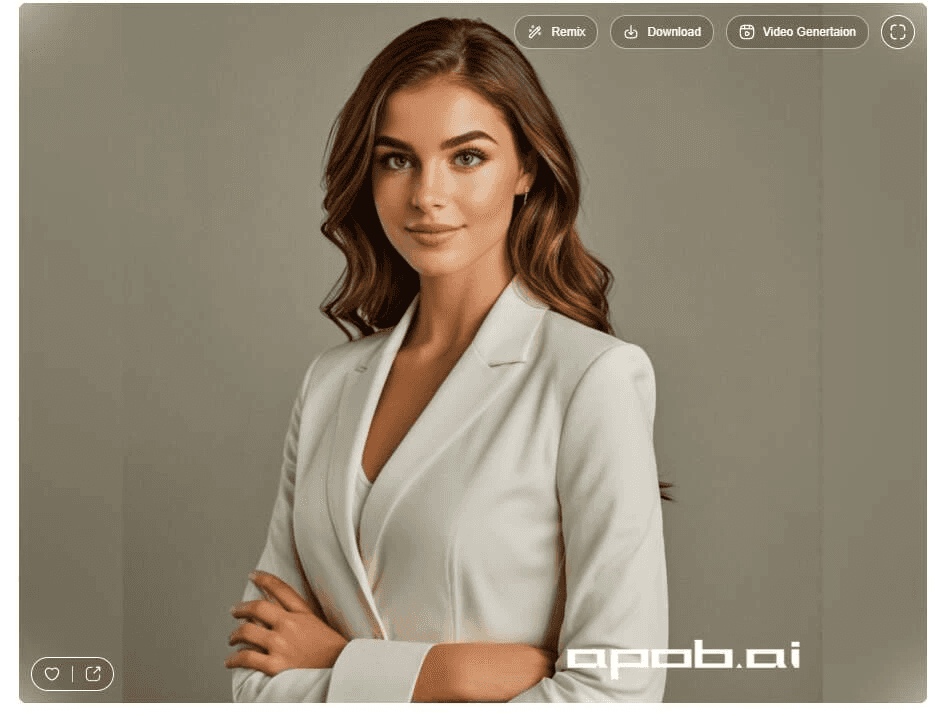
Create a Polished Professional Headshot with AI - No Cost, No Hassle

Create Your LinkedIn Profile with AI for free

No credit card needed


